Communities Benefits from Oil Palm Adaptive Landscapes Project
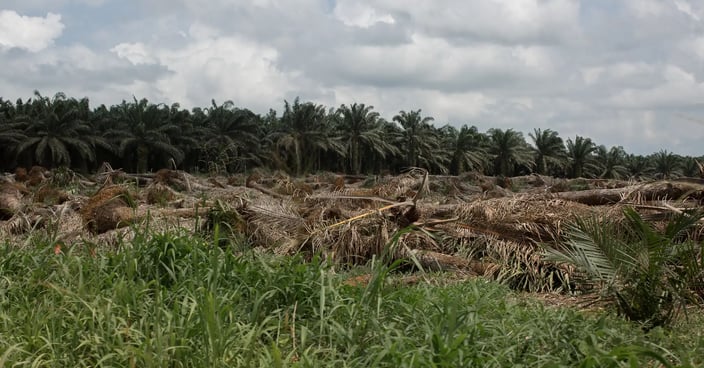
Palm oil is the world’s most important vegetable oil exceeding soybean, rapeseed and sunflower with Malaysia and Indonesia leading in global production. Cameroon is one of Africa’s largest palm oil producers with an estimated current production of 465,000 tons according to statistics from the USDA (Index Mundi). With increasing demand coupled with current deficit in production, the Government of Cameroon is keen on increasing production. Unfortunately, oil palm cultivation has often been associated with deforestation, loss of biodiversity and greenhouse gas (GHG) emission if developed in an unsustainable manner. This is a common scenario across the tropics and the need to embrace sustainable approaches to palm oil production is imperative.
A six-year project known as Oil Palm Adaptive Landscapes (OPAL), implemented in Indonesia, Columbia and Cameroon, sought to improve the management of landscapes by fostering change among stakeholders through scenarios that merge social, economic, and ecological drivers of oil palm development. The outcomes of the project are being used to influence policies that benefit people and the environment. Funded by the Swiss National Science Foundation, one of the envisaged outcomes of the project was to build communication and synergy amongst stakeholders in the sector. The engaged stakeholders included the Government of Cameroon, private sector, civil society organisations, palm oil smallholders and local communities.
Research conducted by the OPAL project shows that smallholders are often at the losing end in the palm oil value chain. In an effort to help solve this, the OPAL project encouraged the organisation of smallholders into cooperatives. Through cooperatives, smallholders can negotiate better for resources with agro-industries and raise funds in an effort to stabilise cooperatives and improve their livelihoods.
According to John Takang, Director of Environmental Governance Institute and partner to the project, smallholders were organised into cooperatives and received training on governance, best management farm practices and contract negotiations. “These trainings have started producing results because more and more smallholders are engaging with the agro-industries in the landscapes. For example, Tiko Area smallholder cooperative engaging with CDC, which is the major agro-industries in the landscape,” John said.
Chief Fobong Andrew of the Tiko Cooperative, one of the beneficiaries of the project, said, “they received trainings that contributed to increasing their production and tonnage.” Gwet Mbock, Delegate of GIC PROAM of Ngwei in the Littoral Region of Cameroon, said they were trained on how to setup and maintain their farms. They also received 425 palm seeds, which helped beef up their nursery.
Taku Robert, Field Manager for SOCAPALM, an agro-industry based in the Littoral Region of Cameroon, said they discovered through a companion modelling game organised by the OPAL project why smallholders were not supplying to them. “We realised that smallholders wanted immediate cash upon the supply of fresh fruits bunches in order to satisfy some of their needs. This has helped them to rework their payment schemes, resulting in improved delivery,” Taku said.
Despite all these benefits, smallholders continue to face challenges, including production cost, low productivity, low extraction rates and low prices. Smallholders still lack the necessary resources, like tractors, to effectively supply fresh fruit bunches to agro-industries. They lack capacity to mobilise financial resources to acquire necessary farm inputs.
It is hoped that, with the implementation of the Strategy for the sustainable development of palm oil in Cameroon, the challenges facing smallholders will be addressed.
For information on this project, check out: https://www.opal-project.org/